Problem:
다음과 같이 선언된 정수를 저장하는 스택 클래스 MyIntStack을 구현하라.
MyIntStack 스택에 저장할 수 있는 정수의 최대 개수는 10이다.
| 1 2 3 4 5 6 7 8 | class MyIntStack{ int p[10]; // 최대 10개의 정수 저장 int tos; // 스택의 꼭대기를 가리키는 인덱스 public: MyIntStack(); bool push(int n); // 정수 n 푸시. 꽉 차 있으면 false, 아니면 true 리턴 bool pop(int &n); // 팝하여 n에 저장. 스택이 비어 있으면 false, 아니면 true 리턴 }; |
MyIntStack 클래스를 활용하는 코드와 Execution Result는 다음과 같다.
| 1 2 3 4 5 6 7 8 9 10 11 12 13 | int main() { MyIntStack a; for(int i=0; i<11; i++) { // 11개를 푸시하면, 마지막에는 stack full이 된다. if(a.push(i)) cout << i << ' '; // 푸시된 값 에코 else cout << endl << i+1 << " 번째 stack full" << endl; } int n; for(int i=0; i<11; i++) { // 11개를 팝하면, 마지막에는 stack empty가 된다. if(a.pop(n)) cout << n << ' '; // 팝 한 값 출력 else cout << endl << i+1 << " 번째 stack empty"; } cout << endl; } |
Execution Result:
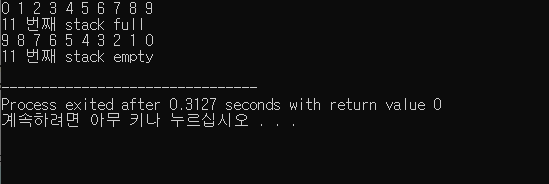
Objective & Hints:
참조에 의한 호출로 효율적인 클래스 만들기
Code:
| 1 2 3 4 5 6 7 8 9 10 11 12 13 14 15 16 17 18 19 20 21 22 23 24 25 26 27 28 29 30 31 32 33 34 35 36 37 38 39 40 41 42 43 44 45 46 47 48 49 | #include |
Explanation:
참조에 의한 호출을 잘 사용하면 메모리 낭비를 줄이고 코드가 단순해져 효율적은 코드를 작성할 수 있습니다.